Featured 1

Curabitur et lectus vitae purus tincidunt laoreet sit amet ac ipsum. Proin tincidunt mattis nisi a scelerisque. Aliquam placerat dapibus eros non ullamcorper. Integer interdum ullamcorper venenatis. Pellentesque habitant morbi tristique senectus et netus et malesuada fames ac turpis egestas.

Featured 2

Curabitur et lectus vitae purus tincidunt laoreet sit amet ac ipsum. Proin tincidunt mattis nisi a scelerisque. Aliquam placerat dapibus eros non ullamcorper. Integer interdum ullamcorper venenatis. Pellentesque habitant morbi tristique senectus et netus et malesuada fames ac turpis egestas.

Featured 3

Curabitur et lectus vitae purus tincidunt laoreet sit amet ac ipsum. Proin tincidunt mattis nisi a scelerisque. Aliquam placerat dapibus eros non ullamcorper. Integer interdum ullamcorper venenatis. Pellentesque habitant morbi tristique senectus et netus et malesuada fames ac turpis egestas.

Featured 4

Curabitur et lectus vitae purus tincidunt laoreet sit amet ac ipsum. Proin tincidunt mattis nisi a scelerisque. Aliquam placerat dapibus eros non ullamcorper. Integer interdum ullamcorper venenatis. Pellentesque habitant morbi tristique senectus et netus et malesuada fames ac turpis egestas.

Featured 5

Curabitur et lectus vitae purus tincidunt laoreet sit amet ac ipsum. Proin tincidunt mattis nisi a scelerisque. Aliquam placerat dapibus eros non ullamcorper. Integer interdum ullamcorper venenatis. Pellentesque habitant morbi tristique senectus et netus et malesuada fames ac turpis egestas.

Showing posts with label Culture. Show all posts

Wednesday, June 15, 2011

Indonesian Arts Institute


ISI has an area of 1500 m2 building in Denpasar have Administration Center / Rektoriat, 2 floors of 1,500 m2 is used for space management, the Bureau / Division / Subdivision with conditions quite well and is still sufficient to be considered is the development of office space for 2 Faculty and Institute of P2M in accordance with ISI method could Denpasar.

Besides, facilities and office equipment that can support service function still needs to be improved.

Building Area 855 m2 3rd floor library was completed in 2002 by bertahap.Koleksi 6358 title / 20 742 ex. have been inadequate; reading room and storage area with adequate books, books in the field of art is still very limited business presence therefore the procurement of books arts should continue to be held, each year an average of 400 ex / book title held by DIP. Power library as much as 2 people Naturalife Greenworld D II library of formal education has not been willing to be of functional library premises reason difficulty in obtaining credit points for promotion. Meanwhile, interest in faculty and students are getting better even though the lecturers should continue to encourage students to read lecture materials are available at the library. An academic library supporting element which provides library materials, audio visual, for the purposes of education, research, and development of science, technology, and / or the arts, and community service for the entire academic community.

bajra shandi


Balinese people struggle monument is one of the technical implementation unit of Bali Provincial Cultural Office, with a vision: meleslarikan niali heroic values, keperintisan kejuangan in support of conservation and cultural development. Pioneer Monument Perijuangan founding idea was the Bali People's Prof.. Dr. Ida Bagus Mantra. former Governor of Bali in 1980. To realize the idea in 1981 he then create a design contest dilaksanakanlah Bali People Struggle Monument. which was won by Ida Bagus Gede Yadnya. Bali People struggle Monument Construction commenced in 1987 and inaugurated on Saturday Umanis, June 14, 2003 by the President of the Republic of Indonesia (Ibu Megawati Sukarno Putri). Aim at awakening the monument was to commemorate the services of a hero, in the struggle to seize and defend the independence of the Republic of Indonesia from the colonial This monument is a manifestation of the phallus and yoni. The meeting between the two elements is a symbol of fertility and prosperity. Besides philosophy yoni phallus. This monument is also guided by the philosophy of the story playback Mandara Giri, drawn from the story of Adi Parwa Balinese people struggle monument is often used as a meeting place both private and governmental organizations meetings and for activities ¬ - race activities, social and religious. In addition, the monument of Balinese People's Struggle, is also intended or can be used for other activities, which are social, and personal, including pre-wedding activities, Galla dinner, meeting or meetings, where luikisan art exhibitions, and activities other cultural activities.

Bali museum

Bali Museum, this museum originally built in 1910 by Dutch Government. In 20 January 1917 this museum was destroyed by the biggest earthquake in Bali. In 1932 the museum rebuilt again till today, there are 4 main building in south pavilion has 2 storey has collection of prehistoric pieces, traditional artefacts and some old painting. Futher north Buleleng building has variety collection of textiles including endek and double ikat gringsing. Other building Karangasem has Balinese calender and priest' clothing. the Northen building is Tabanan has many Barong mask and Keris.

Kertalangu Cultural Village

Kertalangu Cultural Village, as its slogan says is a new concept destination in Bali. Situated in the middle of the rice field in Sanur area Kertalangu gives a rural nuances yet easily reached from the city center. Strategically located on the By Pass in in Kesiman Kertalangu, Padang Galak, East Denpasar, Kertalangu Cultural village is only 15 minutes away from the airport and 10 minutes drive from the city center.

Kertalangu Cultural Village covers 80 hectares area, houses 16 types of handicraft industries , recreational and tourist facilities, organic farming facilities and rows of rice fields which also serves as jogging track. Upon arrival in this cultural village, gallery and shop selling ornamental plants and earthenware on the side of the thoroughfare greet visitors. There are also an open-air restaurant with a stage and a sound system, workshop center, art market, and other tourism facilities in the main area.

But to find the main attraction of this cultural village need a long walk behind. Visitors who walk through the compound will be amazed when they come across dozens of hectares of rice fields. There is a two-meter-wide jogging track meandering through the rice fields. Visitors can also buy vegetables harvested by local farmers like water spinach and legumes along the four-kilometer track. Visitors can also feel the rural life of the farmers by joining the farmers tending the rice fields. Apart from the function as tourism destination, Kertalangu Cultural Village had been established as a means of preserving the dozens of hectares of paddy fields in the center of the city. The farmers also have many benefit from this resort, The farmers are still be able to continue their farming activities and at the same time get additional income from visitors.

Prasasti blanjong

Sanur beach is one of the tourist beaches in Bali, other than Kuta beach. Sanur beach is known also as Pantai Matahari Terbit or Sunrise Beach, because in the morning we can see beautiful sunrise unobstructed by mountains or hills. So coming for a holiday to Bali, do not forget a trip to the coast of Sanur in the morning to see seconds of the rising sun.

Sanur Beach is located in Sanur Village, South Denpasar District Municipality Dati II Denpasar. This beach is located on the east and south Sanur village, which is the edge of the southern Indian Ocean Indonesia island of Bali. The place is famous since ancient times, especially when there is a war Puputan Badung on 20 September 1906 where the Dutch troops landed there. In the history of Ancient Bali, Sanur beach is also famour for the masdih stone monument with the inscription written by Warmadewa the Kasari King, whose palace was in Singhadwala, year 917, which is now located in Southern Blanjong charter Sanur Beach.

In the tourism industry, Sanur beach was first introduced by a Belgian artist named AJ Le Mayeur and his wife Ni Polok who lived there since 1937 and held his own painting exhibition. The attraction of Northern Sanur is the round shape like a half circle and Southern parts turned from East to West, where a wave of sea water was so large and when the water subsided rock exposing colorful stretches. On the day approaching full moon, seawater is rising with rather large waves. In the south-east Nusa Penida group of islands are revealed across the sea and in the east of the panorama looking south coast of the island of Bali with the mountain Agung.

What was interesting from sanur beach than the sun rising?
1. White sand. In Indonesia, a rare white sandy beaches, so this is unique.
2. The hot sun. Suitable for those of you who want to sunbathe along the beach of Sanur.
3. The water is receding in the afternoon. Usually sea water at Sanur Beach in the afternoon low tide, so often found shallow-shallow sea. Visitors use this moment to up the canoe, such a small boat. So much fun!

The surrounding group of isles and coral rocks that jutted into the sea across are visible from the south Sanur Beach. The panorama in southern part of Sanur is more beautiful in the morning. Places of a strategic view is part of the East, the Semawang and Mertasari. Circumstances where the air was fresh, and blowing a comfortable sea breeze. The atmosphere along the coast of Sanur is light and shaded with big trees. Sanur beach is perfect for sunbathing along the white sandy beaches.

Thursday, May 12, 2011

Bali


Bali Island, popular as a holiday island, a land of a thousand gods, thousand temples, thousand dances is located at the Pacific Ocean, just below the equatorial line, on latitude 8 degree south and longitude 115 degree east. The island is considered to be the most attractive island to visitors. It is estimated that they were more than 3.500.000 tourist a year from all round the world. Most of them seek an understanding of a way of life that is really unique.

Bali Islands today become one of most favorite holiday island in the world has been enchanting visitor for centuries with its rich cultural traditions and spectacular panoramas. From lofty, mist enshrouded volcanoes and cool mountain lakes down through terraced rice fields to a golden strand lapped by azure waters; every square inch of Bali offers a fresh and unforgettable image.

Those of you keen on delving into the island’s fascinating culture will have plenty of opportunities, as colorful ceremonies or festival which most involving music, dance, religion and art. All of which are held very close to the hearts of the people. Two of the major festivals are Galungan and Nyepi. Galungan is the major feast of Wuku calendar. For ten days the Gods are said to visit the island and mythical lion dogs prance between temples and villages in celebration. The eve of Nyepi involves the noisy banishment of lingering evil by using music instrument such as gongs, drums, and flame torches. On Nyepi, the whole of Bali is quiet.

The shoppers among you will find Bali a treasure house of handicrafts and fine work of art. The Balinese are incredibly gifted artist and craftsmen, and their material creations are imbued with the same sense of wonderment with which they regard their universe. Stone and wood carving, traditional and modern paintings and intricately designed jewelry in gold and silver are readily available in shops and galleries throughout island.

The artisans, craftspeople and street vendors of Bali are kept busy supplying the tourist demand. Vendors crowd the beaches and streets of major tourist destination offering you their products, which can sometimes become a bit overwhelming but is also a fun way to shop. It this is not quite your style of shopping then try the big department store where prices are fixed and major credit card is accepted. In all areas of Kuta there are a multitude of shop and restaurants selling a wide variety of good including swimwear, sarongs, handicrafts, cassettes, CDs, jewelry, clothing, artworks, furniture and leather goods while Ubud and its surrounding villages considered as home based of all handicraft, gold and silver jewelry.

As for recreation, there is no shortage of options. Nature walks, horseback riding, cruise, fishing tour, diving, surfing – even bungy jumping and white water rafting as well as water sport – awaits.


jatiluwih rice terrace ( subak )


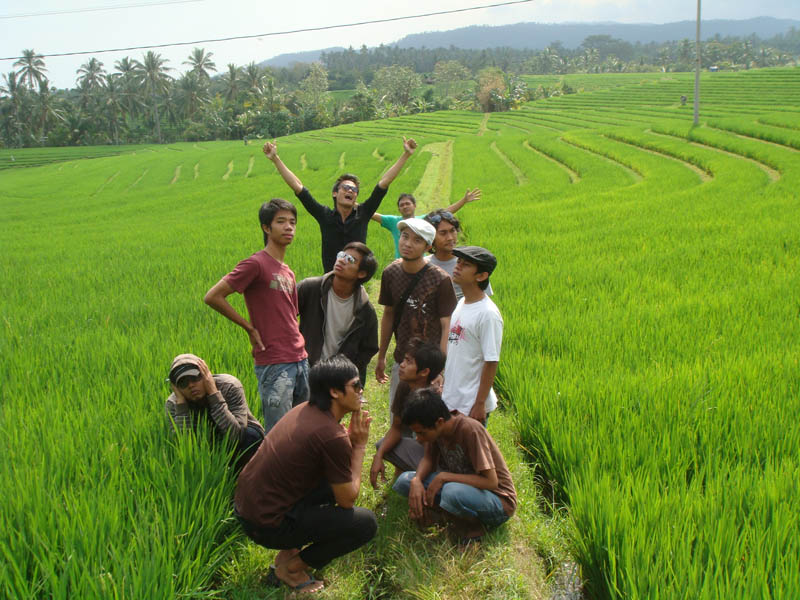
Jatiluwih is one tourist attraction with beautiful panoramas. Variations panoramic rice terraces-steps with heavily wooded mountain backdrop, can be categorized as natural attractions are as interesting as Kintamani and Lake Batur.

Sightseeing Jatiluwihlocated 48 km from Denpasar. Its location is 28 km in the northern city of Tabanan. To be able to enjoy a fun tour, then tour the usual combination of Denpasar – Bedugul – Village Pertigaan Pacung – Teak Luwih – Yeh panes – Tabanan – Alas Kedaton.

Sightseeing Jatiluwih visited by domestic and foreign tourists who want to enjoy the cool and the beauty and expanse of rice field terraces. Ie once every 210 days on Wednesday Kliwon Ugu is a day that held a ceremony Petoyan Pendet Guardian also dances that are sacred.

Jatiluwih as natural attractions in fact been known since the Dutch power Bali (1910-1942). But the road that connects to the object is corrupt then not many tourists who come to enjoy the panorama of lush, cool and refreshing.

Poorly maintained condition lasted until 1970 and after that thanks to government funding, infrastructure development is addressed. It turns out that asphalt roads have been built that can lift the name Teak Luwih become natural attractions for visitors.

Besides enjoying the cool beauty of natural scenery mountains, Jatiluwih also store a unique attraction rituals once every 210 days on a Day Wali, Petoyan, Patirtan Wednesday kliwon Ugu. At its peak the ceremony is also performed a sacred dance Pendet Guardian. (Wan)

Identification and Attractiveness
Jatiluwih including one tourist attraction with beautiful panoramas. Variations panoramic rice terraces-steps with heavily wooded mountain backdrop, can be categorized as natural attractions are very interesting. Teak Luwih have cool air being located at an altitude of 700 m above sea level. In addition to its natural potential, the potential cultural store Jatiluwih historical events especially the construction of a temple that had something to do with the name of Ida Dalem Waturenggong suzerainty in Kraton Gelgel (1460-1551).
Location
Mileage is 48 km from Denpasar. Its location in the north of Tabanan (28 km). To be able to enjoy a fun tour, the tour of Denpasar, Bedugul fork combined Pacung Jatiluwih Village, Tabanan panes Yeh, monuments Subak, Alas kedaton go to Tanah lot to enjoy the Sun Set with a beautiful panoramic beach.

Facilities
Sightseeing Jatiluwih been equipped with parking facilities, toilets, Bale filmed, Wantilan to rest, while for the tourists who visit to enjoy the natural beauty Jatiluwih. In the vicinity of the object has been built a few restourant preparation services in order to eat and drink. Roads are getting upgraded so that vehicles can enter from the east path is through the T-junction towards Teak Luwih Pacung likewise from west route through the attractions Yeh panes Penatahan Batukaru-Pura continued to Jati Luwih

Saturday, September 25, 2010

Spinach and Bean Sprouts in Coconut Sauce

Many Indonesian cultures, including that of Balinese, rejoice in a variety of servings made from bean sprouts salads. It is a very versatile ingredient as it can be served with different sauces like clear soup, assorted salads (serombotan), the one with peanut sauce and so forth. Here is another simpler Balinese salad using this in combination with spinach served in grated coconut sauce. This kind of salad is often used to accompany mixed rice.

Ingredients:

200g of bean sprouts, 1 string of spinach, 1 tbsp fried shallot, 1 tsp fried red chili Ground spices: 1 slice turmeric, 1 slice kencur, 3 cloves shallot, 2 cloves garlic, 1 small chili, 1 pc candlenut, 1 tbsp cooking oil and ½ tsp salt.

Method:

• Cleanse the bean sprouts and spinach carefully.

• Prepare some water in the pan for boiling. When the water has boiled, put bean sprouts and spinach into the water and stir them for some 5 minutes. Take out and drain.

• Stir-fry the ground spices and then add a cup of water. Pour the grated coconut into these spices and stir well until its water runs dry.

• Mix well the bean sprouts and spinach with spices and a little salt. Do not forget to sprinkle the fried shallot and chili. Now, it is ready to serve! (BTN/punia)

Jukut Nangka Mekuah (Young Jackfruit with Coconut Milk)


OVERVIEW:

If jackfruit is not available substitute with summer squash, winter melon or turnip.

INGREDIENTS:

750 gr young jackfruit, peeled, cleaned and cut in pieces 2.5 x 1 cm 1 lt (4 cups) chicken stock ½ cup spice paste for vegetables 4 cups coconut milk 2 tsp salt ½ tsp black peppercorn, crushed Fried shallots to garnish

PREPARATION:

Bring 3 liters (12 cups) of lightly salted water to the boil. Add jackfruit, bring back to the boil, then reduce heat and simmer for 15 minutes. Drain water and rinse jackfruit in ice water. Heat chicken stock, add vegetables spice paste and jackfruit and bring to the boil. Add coconut, milk and simmer, stirring continuously, until jackfruit is tender and stock thickens a little. Season to taste with salt and pepper and garnish with fried shallots. (www.baliguide.com/balifood)

Getting in Touch with Local Culture

Robinson Crusoe might not originally have planed to explore the pristine tropical Island of Màs a Tierra. However, since the ship he went with was wrecked by vicious storm, he had no choice but attempted to save himself to nearest island. Like blessing in disguise, he has fallen in love with the island for some 28 years. He could do many things and obtain valuable experiences while waiting for the time to return home.

At that time, he probably did know about the terms agrotourism. Yet, without being realized he has enjoyed a variety of tourism activities. He got acquainted with local tribes and did farming as the local did.

Agrotourism is similar to what might have been carried out by the figure Robinson Crusoe in the novel authored by Daniel Defoe. It is the form of tourism taking advantage of rural culture as tourist attraction. Its focus lies on cultural landscape. It’s worth noting here that the culture does not only include the arts and tradition, but culture in the general sense as in the seven universal elements of culture that also embrace the system of livelihood, equipment, technology, language, religion and so forth. Actually it’s a comprehensive and sustainable tourism development. By this, local people are enabled to be widely involved in various activities, not merely as passive spectators.

On the other hand, through this activity visitors have a good opportunity to get acquainted with many aspects of rural life, starting from agricultural occupation, local products, traditional culinary, custom and tradition as well as lifestyle of local people. In agricultural field, for instance, there are areas producing characteristic local variety of rice like at Penebel; snakefruit at Pupuan and Sibetan; strawberry at Bedugul; and tangerine at Bondalem and Tejakula to name a few. Then what is making different from that of other regions across the archipelago? This disparity concerns with the tradition and lifestyle. In Bali, visitors will be able to see that local farmers have traditional organization managing the irrigated and non-irrigated farming named subak. Uniquely, they perform ritual to express their gratitude to God on the prosperity obtained from farming on particular days and specifically on Tumpek Bubuh (the nearest one falls on 21 February).

Moreover, this kind of tourism will bring visitors closer to nature and other rural activities beyond farming. Even, they can participate in those activities. For instance, if Bali has rich traditional dances, visitors can join to learn some of them. As a result, visitors do not only visiting Bali to feel the pleasure of touring, watching cultural performance and seeing the enchanting panoramas, but also experiencing in person the local lifestyle. Other than agriculturalrelated activities, Bali retains a wide variety of unique ones that are worth visiting. There are handicraft making, traditional painting, (seasonal) coffee harvesting, fishing and many more. And if possible, they can stay with the local community.

Visitors participated in agrotourism are ideally expected to be more active than the average tourists while on trips. In essence, there are some categories of activity in agrotourism namely the family-oriented activities like sporting and cycling; participatory activities like learning to dance and cook traditional food; nature-oriented activities like horse riding, elephant safari, trekking; farming-related activities like seasonal harvesting, exploring local fruits at traditional market and so forth. These activities can complete the existing tourism product. In Bali, this tourism has become an alternative to avoid the market saturation of those very same products.

Agrotourism does not only enrich the existing tourism products and provide alternative to visitors. To local community, it poses an empowerment that enables to them get involved in the tourist activities. In general, it will make an even distribution of tourist visits to villages and working opportunity. To sum up, this community-based tourism will make available more opportunity to wider community. Hopefully there will be no cases like the closing access to see the beautiful view of terraced rice field as the field’s owner gets nothing from ‘his property of attraction.’ By this development, at least the land owner gets additional benefits from valued asset he has apart from his harvest. By doing so, he would feel the benefit of tourism while remaining cultivating his land. Do you think he will sell his land providing him with such double impacts? (BTN/punia)

Be Cotek: Tasty Hot-Sweet Pony Fish

Cotek or pony fish denotes a bijou and inexpensive marine fish in Bali. Two main characteristics of this fish are the oblong body and large eyes. Nevertheless, it remains to offer delicious taste, moreover, if it is deepfried and served with hot-sweet sauce. But, please be careful of its small bones. In the past, this fish was often used to pay the services of pengujur or people helping fishermen in dragging their traditional boat to and from the sea. Today, this fish can be purchased at traditional and super market.

Ingredient: 400g pony fish or Cotek (finely cleanse and take out its intestines) Spices: 4 cloves shallot, 2 cloves garlic, 1 candlenut, 2 large chilies, 2 small chilies, 1 tbsp palm sugar and 1 pc medium-sized red tomato

Others: 1 cup palm oil, ½ tsp salt and 1 pc lime

Method:

· Smear the cleansed fish by the lime juice and salt. Take a side for 15 minutes.

· Fry the fish until crispy and take out.

· Grind all spices and stir-fry until smelling fragrant. Add slices of palm sugar, salt and keep on stirring until running dry.

· Put the fish on a plate and sprinkle with the hotsweet sauces. Now, it’s ready to serve. (BTN/punia)

Sticky Rice Cake with Green Mung

Around before the 1980s, there were many traditional organizations known as sekaa. Most of them abode in agricultural sector. Area of their activities ranged from cultivating the land up to conveying the rice bundles at post-harvest time to granary. They were carried out through mutual assistance among the members of the sekaa. For consumption, they were largely provided with one time meal at midday and once or two times snack with coffee. As accompaniment to the coffee, it was served traditional cakes such as sticky rice cake with green mung.
Ingredients:
100g green mung, 200g white sticky rice, 1 cup of grated coconut and 1 cup of brown sugar sauce.
Method:
• Soak the white sticky rice for some 2 hours, while the green mung should be soaked for one night.
• Drain and then mix the green mung thoroughly with the white sticky rice. Steam this batter. Add some water onto the half-cooked rice. If the water has run dry, steam it again until cooked.
• Take out and serve it with the sprinkles of grated coconut and brown sugar. Now it is ready to serve. (BTN/punia)

Balinese Temple Ceremony

Every temple and shrine has a special date for it annual ceremony, or “ odalan “, every 210 days according to balinese calendar, including the smaller ancestral shrine which each family possesses. because of this practically every few days a ceremony of festival of some kind takes place in some village in bali. there are also times when the entire island celebrated the same holiday, such as at galungan, kuningan, nyepi day, saraswati day, tumpek landep day, pagerwesi day, tumpek wayang day etc.
The dedication or inauguration day of a Temple is considered its birth day and celebration always takes place on the same day if the wuku or 210 day calendar is used. When new moon is used then the celebration always happens on new moon or full moon. The day of course can differ the religious celebration of a temple lasts at least one full day with some templemcelebrating for three days while the celebration of Besakih temple, the Mother Temple, is never less than 7 days and most of the time it lasts for 11 days, depending on the importance of the occasion.
The celebration is very colorful. The shrine are dressed with pieces of cloths and sometimes with brocade, sailings, decorations of carved wood and sometimes painted with gold and Chinese coins, very beautifully arranged, are hung in the four corners of the shrine. In front of shrine are placed red, white or black umbrellas depending which Gods are worshipped in the shrines.
In front of important shrine one sees, besides these umbrellas soars, tridents and other weapons, the “umbul-umbul”, long flags, all these are prerogatives or attributes of Holiness. In front of the Temple gate put up “Penjor”, long bamboo poles, decorated beautifully ornaments of young coconut leaves, rice and other products of the land. Most beautiful to see are the girls in their colorful attire, carrying offerings, arrangements of all kinds fruits and colored cakes, to the Temple. Every visitor admires the grace with which the carry their load on their heads.